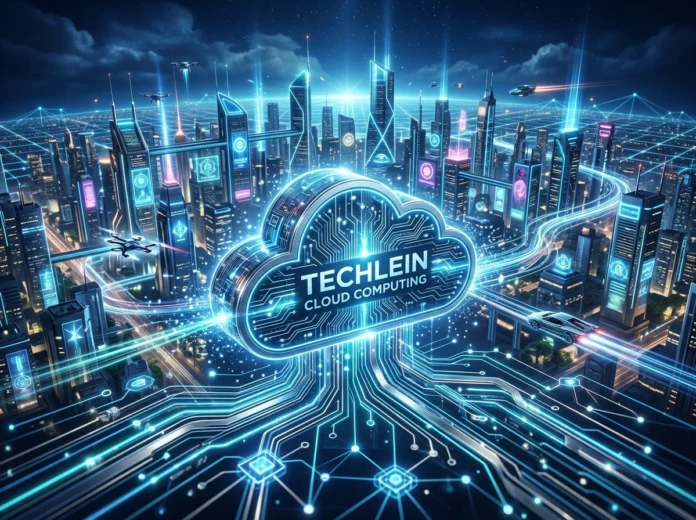
How will Techlein shape the future of cloud computing?

Techlein’s vision for cloud computing integrates advanced artificial intelligence, hybrid cloud architectures, and sustainable infrastructure to drive business innovation in 2026 and beyond. By prioritizing zero-trust security models and platform engineering, Techlein enables organizations to scale digital operations efficiently while meeting mandatory sustainability reporting requirements.

Cloud computing has evolved from a simple data storage solution into the central nervous system of modern business operations. As companies rapidly digitize their workflows, they face new challenges regarding infrastructure scalability, security vulnerabilities, and environmental impact. Organizations need a strategic roadmap to navigate these complexities and maximize their technological investments.

Techlein, a leading cloud solutions provider, recognizes that the next phase of digital transformation requires a holistic approach. The company focuses on building resilient systems that seamlessly integrate emerging technologies while maintaining strict compliance and cost efficiency. By understanding these shifting dynamics, business leaders can make informed decisions about their infrastructure.

This comprehensive guide explores Techlein’s vision for the next generation of digital infrastructure. Readers will learn about the current market landscape, discover the impact of artificial intelligence on server management, and understand how to implement sustainable computing practices that align with upcoming regulatory demands.

What is the current state of the global cloud computing market?

The transition to cloud-based systems has accelerated rapidly over the past few years. According to a 2025 report by Softjourn, the global cloud computing market reached approximately $913 billion and analysts predict it will surpass $1 trillion by 2028. This massive financial growth reflects a fundamental shift in how organizations manage their digital workloads.

Currently, business adoption rates are exceptionally high. Softjourn data indicates that over 94% of companies utilize cloud services in some capacity in 2026. Furthermore, nearly all new digital workloads will be built on cloud-native platforms by 2028. This means that traditional on-premises servers are becoming obsolete for standard enterprise applications.

Techlein observes that organizations are heavily favoring hybrid and multi-cloud environments to avoid vendor lock-in. ShapeBlue research highlights that 87% of enterprises run workloads across multiple clouds. Businesses utilize two or more cloud providers to maintain flexibility, reduce potential downtime, and negotiate better pricing structures.

Which emerging technologies will transform cloud infrastructure by 2028?

As the foundational architecture of the internet evolves, new hardware and software paradigms are emerging to meet escalating processing demands. Techlein anticipates that several specific technologies will redefine how data centers operate.

How are ARM servers changing data center efficiency?

Energy limitations and cost pressures are pushing alternative processors into mainstream enterprise consideration. Data centers traditionally relied on x86 architectures, but ARM servers are now gaining significant traction. ShapeBlue notes that customers dealing with strict power constraints evaluate ARM processors as a viable option for predictable, scale-out workloads. These processors consume less electricity while delivering high performance, making them an ideal choice for the next generation of cloud infrastructure.

Why is platform engineering critical for software development?

Managing complex cloud environments requires sophisticated internal tooling. Gartner predicts that 80% of large software engineering organizations will establish platform engineering teams by 2026. These teams build Internal Developer Platforms that abstract the complexities of configuring infrastructure. Techlein supports the adoption of these platforms because they allow developers to deploy applications faster and securely without needing deep expertise in server provisioning.

How will Techlein secure the next generation of cloud environments?

Despite the numerous benefits of cloud adoption, security remains a primary concern for business leaders. Softjourn reports that 98% of companies experienced cloud breaches between 2024 and 2026. The financial impact of these breaches is severe, with compromised multi-cloud environments incurring average costs of $5.05 million per incident.

What are the main causes of cloud security vulnerabilities?

Human error is the leading cause of security failures in modern infrastructure. According to Softjourn, cloud misconfigurations account for roughly 68% of potential security vulnerabilities, and 82% of these misconfigurations result directly from human mistakes. Phishing attacks also play a significant role, factoring into at least 25% of cloud-related breaches.

To combat these threats, Techlein advocates for the widespread implementation of Zero Trust security models. The Zero Trust market is projected to reach $78.7 billion by 2029. This security framework requires strict identity verification for every person and device attempting to access network resources, regardless of whether they are situated inside or outside the network perimeter. Choose a Zero Trust architecture if data protection matters more than legacy system compatibility.

What are the best practices for sustainable and green cloud computing?

Environmental impact is no longer a secondary consideration for technology companies. Sustainability constraints are actively shaping how data centers are designed and operated.

Techlein emphasizes that power availability and high-density cooling are now core design drivers for new infrastructure projects. ShapeBlue reports that sustainability reporting has become mandatory for many organizations. Customers must now track and report on power usage, cooling efficiency, and overall carbon metrics.

To achieve green computing goals, businesses should migrate workloads to regions powered by renewable energy. Additionally, organizations can adopt serverless computing models. Serverless architectures ensure that compute resources are only active when code is running, significantly reducing the energy wasted on idle servers. By utilizing ARM-based instances and optimizing code efficiency, companies can drastically lower their carbon footprint while simultaneously reducing operational costs.

How does artificial intelligence optimize cloud automation and operations?

Artificial intelligence is the most significant catalyst for recent cloud expansion. Softjourn data reveals that generative artificial intelligence alone contributed to half of all cloud revenue growth in 2024 and 2025. Currently, 84% of organizations integrate artificial intelligence into their cloud operations.

How do hyperscalers support massive AI workloads?

Major cloud providers are investing unprecedented amounts of capital into specialized hardware to support artificial intelligence. Gartner expects global artificial intelligence infrastructure spending to surpass $2 trillion in 2026. Providers are deploying advanced Graphics Processing Units and AI accelerators to handle the massive computational requirements of training large language models.

Techlein leverages artificial intelligence to enhance IT operations, a practice known as AIOps. AIOps tools analyze vast amounts of operational data to predict system failures before they occur. These intelligent systems automatically detect anomalies, scale resources based on real-time demand, and trigger remediation actions without human intervention. By adopting AIOps, Techlein helps organizations minimize downtime and optimize their resource allocation.

What steps should organizations take to prepare for cloud innovation?

The cloud computing landscape of 2026 demands strategic foresight and adaptable infrastructure. Techlein believes that organizations must move beyond basic migration strategies and focus on optimization, security, and sustainability.

To remain competitive, business leaders should audit their current cloud expenditures to identify wasted resources. Since 31% of IT leaders waste half their cloud spend on idle resources, establishing strict financial operations practices is essential. Furthermore, companies must invest in continuous training to bridge the skills gap, as 76% of organizations report a shortage of qualified cloud professionals. By partnering with a dedicated cloud solutions provider like Techlein, businesses can confidently navigate the complexities of modern infrastructure and build a resilient foundation for future growth.

Frequently Asked Questions

What is the estimated cost of migrating to a hybrid cloud model?

The cost of migrating to a hybrid cloud model varies heavily based on the size of the organization and the volume of data. Small to medium businesses typically spend between $10,000 and $50,000 for initial migration, while large enterprises can incur costs exceeding $1 million. These expenses include data transfer fees, consulting services, and the implementation of new orchestration software.

How long does it take to implement zero-trust security in cloud environments?

Implementing a comprehensive zero-trust security framework usually takes between six to eighteen months for a mid-sized enterprise. The timeline depends on the complexity of the existing network, the number of remote employees, and the current state of identity and access management systems.

What are the main risks associated with artificial intelligence in cloud computing?

The primary risks involve data privacy and software vulnerabilities. Softjourn reports that 62% of organizations had at least one vulnerable artificial intelligence package in their cloud environment in 2025. Additionally, training artificial intelligence models requires access to massive datasets, which increases the potential surface area for data breaches if not properly secured.

Who benefits most from adopting multi-cloud strategies in 2026?

Enterprises with strict regulatory compliance needs and high-availability requirements benefit the most from multi-cloud strategies. Financial institutions, healthcare providers, and global e-commerce platforms use multiple cloud vendors to ensure their applications remain online during regional outages and to prevent vendor lock-in regarding pricing.

Please visit website for more info.

Explore more

Gamevault: The perfect solution for organizing your PC games Quick answer: The GameVault self-hosted gaming platform is a dedicated application for organizing and distributing legally owned, DRM-free PC games. By deploying GameVault on a personal server, gamers can bypass third-party storefronts, track playtime statistics, enrich game metadata automatically, and maintain total ownership over their digital game libraries. Managing a massive PC game collection across multiple digital storefronts often frustrates PC gamers. Users purchase titles from various providers, resulting in fragmented libraries scattered across half a dozen proprietary clients. This fragmentation forces players to run unnecessary background software, consuming valuable system resources just to launch a single title. Digital ownership also presents a growing concern for modern software consumers. When you purchase a title on a major storefront, you typically purchase a license to access the software rather than the software itself. If a platform revokes your license, shuts down its servers, or removes a specific title due to licensing disputes, you lose access to your purchase entirely. This reality has driven a massive resurgence in the popularity of DRM-free (Digital Rights Management-free) software, where consumers can download standalone installation files and retain them indefinitely. However, accumulating hundreds of DRM-free installation files creates a new organizational challenge. Storing loose executable files and zipped archives on external hard drives makes finding, installing, and updating titles incredibly tedious. PC gamers need a centralized, organized way to view their offline collections. The GameVault self-hosted gaming platform solves this exact problem. By bringing the polished interface of a commercial storefront to your private home server, GameVault allows you to catalog, distribute, and play your legally owned DRM-free collection with exceptional ease. This article explores how GameVault works, details its core features, and explains why it serves as the ultimate game organization tool for dedicated PC gamers. What is the GameVault self-hosted gaming platform? The GameVault self-hosted gaming platform is a specialized ecosystem designed to host, manage, and distribute DRM-free game files from a private server. Unlike aggregator tools that simply combine existing store libraries into one visual interface, GameVault operates entirely independently of corporate storefronts. You supply the game files, host the server, and control the entire ecosystem. GameVault consists of two main components: the backend server and the frontend client. The backend server runs on your personal hardware (such as a NAS device, a Virtual Private Server, or a dedicated home server) and indexes your raw game files. It scans your designated storage directories, identifies the game archives, and builds a comprehensive database. The frontend client operates as a native Windows application or a responsive Web UI. This client connects to your private server, presenting your raw files as a visually stunning, highly organized game library. Users can browse their collections, click a single button to download the files to their local machine, and launch the title directly from the GameVault interface. Because the games run locally on your hardware, you never have to worry about the latency or video compression issues associated with cloud game streaming. Which core features does GameVault use to organize your game library? Organizing a massive catalog of software requires robust features. The GameVault self-hosted gaming platform provides an extensive suite of tools designed to automate library management and enhance the user experience. Automatic metadata enrichment through IGDB Manually adding cover art, descriptions, release dates, and developer information for hundreds of titles wastes countless hours. GameVault automates this entire process through a direct integration with IGDB (Internet Game Database). When you drop a new game folder into your server directory, GameVault scans the file name and automatically queries the IGDB API. The server fetches high-quality cover art, background images, genre tags, and detailed game summaries. By default, GameVault caches this metadata for 30 days to ensure your library always displays the most accurate and up-to-date information. Users simply add their files to a folder, and GameVault handles the visual presentation. Detailed playtime and progress tracking Tracking the time spent inside a virtual world remains a highly requested feature for PC gamers. GameVault monitors your active sessions and records your exact playtime for every title in your library. The application logs when you start an application and when you close it, compiling detailed statistics over time. This feature allows users to easily manage their backlog of unplayed titles. You can sort your library by playtime to identify neglected purchases or view your most played titles of the year. The platform also supports save file management. Users can configure GameVault to upload up to 10 localized save files per game directly to the server, ensuring your progress remains backed up and accessible. Multi-user social features and account management GameVault transforms a solitary hard drive into a private gaming community. Server administrators can create individual user accounts for friends and family members. Each user receives their own personalized view of the library, independent playtime tracking, and customized client settings. Administrators maintain complete control over user permissions. You can restrict access based on parental controls, establishing an age of majority (such as 18) and filtering out mature titles for younger users. The platform also features online activity statuses, allowing you to see exactly what your friends are currently playing in real-time. What are the main benefits of using GameVault for gamers? Choosing to self-host your library requires a small initial time investment, but the long-term benefits for digital software consumers are substantial. Total digital ownership and preservation The primary benefit of using GameVault is absolute digital preservation. Because GameVault focuses exclusively on DRM-free software, you never have to authenticate your purchases through a third-party server. If your internet connection drops, your GameVault client still launches your installed titles flawlessly. You preserve the history of your digital media exactly as you purchased it, entirely insulated from corporate licensing changes or server shutdowns. Escaping aggressive platform DRM Modern storefronts often package titles with aggressive DRM software that requires an always-online connection. This DRM can degrade application performance, increase loading times, and introduce software conflicts. By curating a DRM-free library inside GameVault, you ensure your PC runs only the code necessary to play the title itself. Enhanced privacy and data security Commercial launchers harvest extensive amounts of user data, tracking your browsing habits, hardware configurations, and purchasing history to serve targeted advertisements. The GameVault self-hosted gaming platform respects user privacy by design. All telemetry, playtime data, and library statistics remain localized on your personal database. The software does not track your data for marketing purposes, ensuring your recreational habits remain entirely private. How does GameVault streamline your daily gaming experience? GameVault makes interacting with offline files incredibly efficient. Setting up the platform requires a basic understanding of server deployment, but the daily usage experience mirrors the convenience of enterprise software. Seamless Docker Compose deployment Administrators can deploy the GameVault backend in minutes using Docker and Docker Compose. Docker isolates the application inside a container, preventing software conflicts with other services running on your hardware. To streamline the installation, GameVault utilizes a simple docker-compose.yml file. Administrators map their local game folders to the container's internal /files directory, set up a PostgreSQL database connection, and start the service with a single command. The software also supports advanced configuration hierarchies, allowing users to define settings via Docker Secrets, environment variables, or organized YAML files. Automated file extraction and installation When a user clicks "Download" on the GameVault client, the software initiates a direct file transfer from the private server to the local machine. The platform supports massive bandwidth limits, allowing users on local networks to download massive applications in minutes. GameVault automatically handles complex archive formats like .zip, .7z, and .rar. It extracts the contents to the user's local directory and intelligently identifies the primary executable file required to launch the application. For standard Windows setup files, GameVault can even utilize default command-line parameters (such as /SILENT) to attempt a completely automated background installation. How to choose between GameVault and other game launchers? When evaluating game organization tools, consumers often compare GameVault to other popular clients like Playnite or GOG Galaxy. The correct choice depends entirely on how you purchase and store your software. Choose the GameVault self-hosted gaming platform if your primary goal is hosting and distributing your own raw, DRM-free installation files from a centralized server to multiple client machines. GameVault excels when you want to act as your own private storefront, completely independent of external account integrations. Choose Playnite or GOG Galaxy if you rely heavily on DRM-protected purchases from major storefronts (like Steam or Epic Games) and simply want a unified visual interface to launch them. These aggregator tools scan your local machine for installed storefront clients and launch the corresponding DRM software required to play the title. They do not host your installation files or distribute them across a network. Ready to take back control of your game collection? The shift toward self-hosted software solutions represents a necessary evolution in digital media preservation. As digital storefronts become more restrictive, gamers need reliable tools to manage the media they legally own. The GameVault self-hosted gaming platform offers a polished, robust, and highly customizable environment that respects both the user and the software. By combining automated metadata enrichment, detailed playtime tracking, and effortless file distribution, it provides a premium library experience without the drawbacks of corporate oversight. Start organizing your DRM-free collection today by exploring the GameVault documentation and deploying your first container. Frequently asked questions about GameVault Can GameVault manage my Steam or Epic Games library? No. GameVault is built specifically for organizing and distributing DRM-free content, such as titles purchased from GOG or Humble Bundle. It cannot bypass the proprietary DRM used by major storefronts. Is the GameVault self-hosted gaming platform free to use? Yes, the core ecosystem of the GameVault self-hosted gaming platform is entirely free to download and deploy. The developers offer an optional GameVault+ premium subscription for users seeking advanced features, but the foundational library management tools remain permanently free. Do I need a PostgreSQL database to run GameVault? While the developers strongly recommend using a PostgreSQL database for optimal performance and stability, GameVault does support SQLite for users who prefer a simpler, single-file database structure during testing or lightweight deployments. Can I run the GameVault client on Linux or macOS? Currently, GameVault provides a native desktop client specifically for Windows operating systems. However, users on Linux and macOS can fully access their organized libraries, download files, and manage their profiles using the platform's responsive Web UI. Does GameVault support cloud game streaming? No. GameVault operates strictly as a library management and file distribution platform. Users download the game files from the server to their local machine, and the application utilizes the local hardware's processing power to run the software. Meta data Meta title GameVault: The Perfect Solution for Organizing Your Games Meta description Discover how the GameVault self-hosted gaming platform helps you organize, manage, and distribute your DRM-free PC game collection with automated metadata.

Gamevault: The perfect solution for organizing your PC games

The GameVault self-hosted gaming platform is a dedicated application for organizing and distributing legally owned, DRM-free PC games. By deploying GameVault on a personal...

Why 1xbet Mobile is Bangladesh’s Betting Future

The landscape of sports betting and online gaming across South Asia is shifting rapidly. Gone are the days when placing a wager required a...
The Ultimate Guide to Buying Sports Guest Posts

The Ultimate Guide to Buying Sports Guest Posts

Building a successful sports website requires more than just publishing great articles or selling top-tier merchandise. You need search engines to recognize your site...
Top Mistakes to Avoid When Buying Finance Guest Posts

Top Mistakes to Avoid When Buying Finance Guest Posts

Securing high-quality backlinks in the financial sector requires a careful, strategic approach. Search engines apply strict scrutiny to websites dealing with money, investing, and...
The Risks and Rewards of Buying PBN Backlinks

The Risks and Rewards of Buying PBN Backlinks

Building a powerful link profile is one of the most challenging aspects of search engine optimization. You can write exceptional content and optimize your...
Outrank Your Rivals: The Ultimate Guide to Editorial Links

Outrank Your Rivals: The Ultimate Guide to Editorial Links

Securing a top spot on search engine results pages is one of the most challenging aspects of digital marketing. Countless businesses vie for the...
Spot High-Quality Gambling Backlinks Before You Buy

Spot High-Quality Gambling Backlinks Before You Buy

Securing top positions in search engine results is notoriously difficult for online casinos and sports betting platforms. Search algorithms apply intense scrutiny to the...
Buy Backlinks: A Guide to Boosting Domain Authority

Buy Backlinks: A Guide to Boosting Domain Authority

Search engine optimization is a constantly evolving discipline, yet one fundamental element remains firmly at the core of Google’s algorithm: the backlink. For as...