The Role of a Volume Bot Solana in Early Token Momentum

Launching a token on Solana is the easy part. Getting people to notice it is where most projects stall. A fresh contract with no trades, no chart movement, and no buzz looks lifeless to traders scanning for opportunities. That stillness can quietly kill a promising project before it gets a fair shot.

This is where volume bots enter the conversation. In this article, you’ll learn what a volume bot is, why early momentum matters so much on Solana, how these tools work, and the risks and best practices every founder should weigh before using them.

What Is a Volume Bot?

A volume bot is an automated program that executes buy and sell trades on a token to generate trading activity. Instead of waiting for organic traders to find a brand-new token, the bot creates measurable movement across decentralized exchanges (DEXs).

The result shows up where it counts: rising transaction counts, more active wallets, and visible chart activity on tracking platforms. On Solana, where transactions are fast and cheap, these bots can run frequently without burning through large fees.

It helps to separate two ideas here. A volume bot generates trade activity. A holder bot, by contrast, focuses on increasing the number of wallets holding a token. Many founders use both to shape how their project appears to the market.

Example: A new meme coin launches with zero trades for an hour. A volume bot begins cycling small trades, and within minutes the token appears on trending feeds where real traders browse for early plays.

Why Early Token Momentum Matters

Early momentum is social proof in numerical form. Traders rarely buy into silence. They look for signals that others are already interested.

Here’s why those first hours and days carry so much weight:

  • Discovery: Tracking sites like DEX aggregators rank tokens partly by recent volume. More activity means more visibility.
  • Credibility: A token with steady trades looks alive and trustworthy. A flat chart signals a dead or abandoned project.
  • Psychology: Momentum triggers fear of missing out. Traders pile into things that appear to be moving.
  • Listing potential: Exchanges and aggregators often weigh trading volume when deciding what to feature or list.

Without early traction, even a strong project can drift unnoticed. The token economy moves fast, and attention is the scarcest resource. If nobody sees your launch, the quality of your idea barely matters.

How Volume Bots Work on the Solana Blockchain

Solana’s design makes it especially suited for automated trading activity. Block times are short, fees are tiny, and throughput is high. That combination lets bots operate at a pace that would be costly or slow on other chains.

The basic mechanics

Most volume bots follow a similar loop:

  1. Wallet setup: The bot controls multiple wallets, each funded with SOL and a small token balance.
  2. Trade execution: It places buy and sell orders through DEXs such as Raydium or Orca, often routing through liquidity pools.
  3. Pattern variation: Quality bots randomize trade sizes and timing to mimic natural human behavior rather than robotic, identical orders.
  4. Activity reporting: The trades register on-chain and feed into analytics tools that traders watch.

Why Solana specifically

The low transaction cost is the key advantage. A bot can make hundreds of small trades for a fraction of what similar activity would cost on a high-fee network. That affordability lets founders sustain visible activity through the fragile early window.

Tools built for this environment, like a dedicated volume bot solana service, are designed around the chain’s speed and fee structure. They aim to produce activity that blends in with genuine market flow.

Risks and Ethical Considerations

Now for the part too many guides skip. Volume bots sit in a gray zone, and using one carelessly can damage your project and your reputation.

Artificial activity is not real demand. A bot can make a chart look busy, but it doesn’t create genuine buyers. If organic interest never arrives, the inflated activity simply masks an empty room. When the bot stops, the truth shows.

Regulatory and platform risk. Generating fake volume to mislead investors can resemble market manipulation, which carries legal exposure in many regions. Some platforms also ban or delist tokens caught using deceptive activity.

Detection is improving. Analytics firms and savvy traders increasingly spot bot patterns. If your token gets flagged as “wash traded,” trust evaporates fast and rarely returns.

Cost and dependency. Relying on bots to prop up a chart can become an expensive habit that delays the real work of building a community.

Consider this self-check: If you removed all bot activity tomorrow, would your token still have a heartbeat? If the honest answer is no, the bot is hiding a problem rather than solving one.

Best Practices for Token Launchers

Used thoughtfully, automated volume can be one tool inside a broader launch strategy, not a substitute for substance. Here’s how to approach it responsibly.

Treat it as a bridge, not a foundation

Use volume activity to cross the cold-start gap, the dead period right after launch when no one knows you exist. The goal is to buy time for organic interest to take hold, then taper off.

Pair activity with genuine building

Do this:

  • Build a real community on Discord, Telegram, and X before and during launch.
  • Provide clear utility, tokenomics, and a transparent roadmap.
  • Use modest, realistic activity levels that match a project of your size.

Avoid this:

  • Inflating volume to absurd levels that scream manipulation.
  • Promising guaranteed price gains to your community.
  • Relying solely on bots while ignoring real engagement.

Keep patterns natural

If you use a tool, choose one that randomizes trade sizes and timing. Identical, clockwork trades are the fastest way to get flagged. Subtlety protects credibility.

Be honest with yourself about intent

There’s a difference between seeding initial visibility and deceiving investors about demand. Stay on the right side of that line. The projects that last are the ones that convert early attention into real holders.

Common mistake and how to fix it

Mistake: Founders pour their entire budget into volume and nothing into community or product.

Fix: Split your resources. Let activity tools handle short-term visibility while you invest the bulk of your energy in building something people actually want to hold.

But What If You Skip Bots Entirely?

That’s a completely valid path. Plenty of successful tokens grow through organic hype, strong narratives, and grassroots communities alone. If you have an engaged following ready to trade at launch, you may not need automated activity at all.

The honest takeaway: a volume bot is a tool, not a strategy. It can amplify a good launch, but it can’t rescue a bad one.

Conclusion

Early momentum decides whether a Solana token gets discovered or disappears. Volume bots offer one way to spark that initial visibility, generate social proof, and improve the odds of catching organic traders during the critical opening window.

Keep these points in mind:

  • Use automated activity as a temporary bridge, never a permanent crutch.
  • Weigh the legal, reputational, and ethical risks before you start.
  • Invest most of your effort in real community and genuine utility.

Your next step is simple: decide whether your launch needs a visibility boost or a stronger foundation first. Get that answer right, and every other decision becomes easier.


Explore more

Free Credit Link Malaysia: A Practical Guide for Gig and Freelance Workers

Free Credit Link Malaysia: A Practical Guide for Gig and Freelance...

Freelancing and gig work have changed the way Malaysians earn a living. From delivery riders weaving through Kuala Lumpur traffic to designers taking client...
The Benefits of Following veganovtrichy for Daily Vegan Motivation

The Benefits of Following veganovtrichy for Daily Vegan Motivation

Sticking to a plant-based lifestyle feels easy on some days and tough on others. You wake up motivated, ready to cook fresh meals and...
How Techleez Empowers Global Tech Enthusiasts

How Techleez Empowers Global Tech Enthusiasts

Techleez is a digital educational platform that empowers tech enthusiasts worldwide by providing practical tech tips, unbiased app reviews, and guides on artificial intelligence...
How will Techlein shape the future of cloud computing?

How will Techlein shape the future of cloud computing?

Techlein’s vision for cloud computing integrates advanced artificial intelligence, hybrid cloud architectures, and sustainable infrastructure to drive business innovation in 2026 and beyond. By...
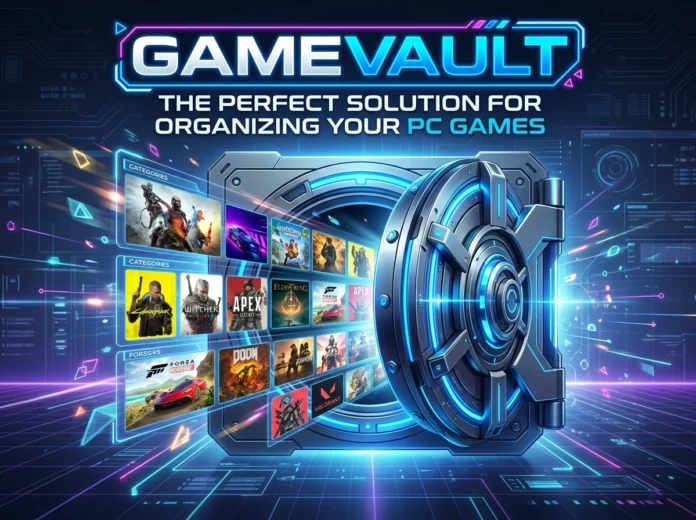
Gamevault: The perfect solution for organizing your PC games Quick answer: The GameVault self-hosted gaming platform is a dedicated application for organizing and distributing legally owned, DRM-free PC games. By deploying GameVault on a personal server, gamers can bypass third-party storefronts, track playtime statistics, enrich game metadata automatically, and maintain total ownership over their digital game libraries. Managing a massive PC game collection across multiple digital storefronts often frustrates PC gamers. Users purchase titles from various providers, resulting in fragmented libraries scattered across half a dozen proprietary clients. This fragmentation forces players to run unnecessary background software, consuming valuable system resources just to launch a single title. Digital ownership also presents a growing concern for modern software consumers. When you purchase a title on a major storefront, you typically purchase a license to access the software rather than the software itself. If a platform revokes your license, shuts down its servers, or removes a specific title due to licensing disputes, you lose access to your purchase entirely. This reality has driven a massive resurgence in the popularity of DRM-free (Digital Rights Management-free) software, where consumers can download standalone installation files and retain them indefinitely. However, accumulating hundreds of DRM-free installation files creates a new organizational challenge. Storing loose executable files and zipped archives on external hard drives makes finding, installing, and updating titles incredibly tedious. PC gamers need a centralized, organized way to view their offline collections. The GameVault self-hosted gaming platform solves this exact problem. By bringing the polished interface of a commercial storefront to your private home server, GameVault allows you to catalog, distribute, and play your legally owned DRM-free collection with exceptional ease. This article explores how GameVault works, details its core features, and explains why it serves as the ultimate game organization tool for dedicated PC gamers. What is the GameVault self-hosted gaming platform? The GameVault self-hosted gaming platform is a specialized ecosystem designed to host, manage, and distribute DRM-free game files from a private server. Unlike aggregator tools that simply combine existing store libraries into one visual interface, GameVault operates entirely independently of corporate storefronts. You supply the game files, host the server, and control the entire ecosystem. GameVault consists of two main components: the backend server and the frontend client. The backend server runs on your personal hardware (such as a NAS device, a Virtual Private Server, or a dedicated home server) and indexes your raw game files. It scans your designated storage directories, identifies the game archives, and builds a comprehensive database. The frontend client operates as a native Windows application or a responsive Web UI. This client connects to your private server, presenting your raw files as a visually stunning, highly organized game library. Users can browse their collections, click a single button to download the files to their local machine, and launch the title directly from the GameVault interface. Because the games run locally on your hardware, you never have to worry about the latency or video compression issues associated with cloud game streaming. Which core features does GameVault use to organize your game library? Organizing a massive catalog of software requires robust features. The GameVault self-hosted gaming platform provides an extensive suite of tools designed to automate library management and enhance the user experience. Automatic metadata enrichment through IGDB Manually adding cover art, descriptions, release dates, and developer information for hundreds of titles wastes countless hours. GameVault automates this entire process through a direct integration with IGDB (Internet Game Database). When you drop a new game folder into your server directory, GameVault scans the file name and automatically queries the IGDB API. The server fetches high-quality cover art, background images, genre tags, and detailed game summaries. By default, GameVault caches this metadata for 30 days to ensure your library always displays the most accurate and up-to-date information. Users simply add their files to a folder, and GameVault handles the visual presentation. Detailed playtime and progress tracking Tracking the time spent inside a virtual world remains a highly requested feature for PC gamers. GameVault monitors your active sessions and records your exact playtime for every title in your library. The application logs when you start an application and when you close it, compiling detailed statistics over time. This feature allows users to easily manage their backlog of unplayed titles. You can sort your library by playtime to identify neglected purchases or view your most played titles of the year. The platform also supports save file management. Users can configure GameVault to upload up to 10 localized save files per game directly to the server, ensuring your progress remains backed up and accessible. Multi-user social features and account management GameVault transforms a solitary hard drive into a private gaming community. Server administrators can create individual user accounts for friends and family members. Each user receives their own personalized view of the library, independent playtime tracking, and customized client settings. Administrators maintain complete control over user permissions. You can restrict access based on parental controls, establishing an age of majority (such as 18) and filtering out mature titles for younger users. The platform also features online activity statuses, allowing you to see exactly what your friends are currently playing in real-time. What are the main benefits of using GameVault for gamers? Choosing to self-host your library requires a small initial time investment, but the long-term benefits for digital software consumers are substantial. Total digital ownership and preservation The primary benefit of using GameVault is absolute digital preservation. Because GameVault focuses exclusively on DRM-free software, you never have to authenticate your purchases through a third-party server. If your internet connection drops, your GameVault client still launches your installed titles flawlessly. You preserve the history of your digital media exactly as you purchased it, entirely insulated from corporate licensing changes or server shutdowns. Escaping aggressive platform DRM Modern storefronts often package titles with aggressive DRM software that requires an always-online connection. This DRM can degrade application performance, increase loading times, and introduce software conflicts. By curating a DRM-free library inside GameVault, you ensure your PC runs only the code necessary to play the title itself. Enhanced privacy and data security Commercial launchers harvest extensive amounts of user data, tracking your browsing habits, hardware configurations, and purchasing history to serve targeted advertisements. The GameVault self-hosted gaming platform respects user privacy by design. All telemetry, playtime data, and library statistics remain localized on your personal database. The software does not track your data for marketing purposes, ensuring your recreational habits remain entirely private. How does GameVault streamline your daily gaming experience? GameVault makes interacting with offline files incredibly efficient. Setting up the platform requires a basic understanding of server deployment, but the daily usage experience mirrors the convenience of enterprise software. Seamless Docker Compose deployment Administrators can deploy the GameVault backend in minutes using Docker and Docker Compose. Docker isolates the application inside a container, preventing software conflicts with other services running on your hardware. To streamline the installation, GameVault utilizes a simple docker-compose.yml file. Administrators map their local game folders to the container's internal /files directory, set up a PostgreSQL database connection, and start the service with a single command. The software also supports advanced configuration hierarchies, allowing users to define settings via Docker Secrets, environment variables, or organized YAML files. Automated file extraction and installation When a user clicks "Download" on the GameVault client, the software initiates a direct file transfer from the private server to the local machine. The platform supports massive bandwidth limits, allowing users on local networks to download massive applications in minutes. GameVault automatically handles complex archive formats like .zip, .7z, and .rar. It extracts the contents to the user's local directory and intelligently identifies the primary executable file required to launch the application. For standard Windows setup files, GameVault can even utilize default command-line parameters (such as /SILENT) to attempt a completely automated background installation. How to choose between GameVault and other game launchers? When evaluating game organization tools, consumers often compare GameVault to other popular clients like Playnite or GOG Galaxy. The correct choice depends entirely on how you purchase and store your software. Choose the GameVault self-hosted gaming platform if your primary goal is hosting and distributing your own raw, DRM-free installation files from a centralized server to multiple client machines. GameVault excels when you want to act as your own private storefront, completely independent of external account integrations. Choose Playnite or GOG Galaxy if you rely heavily on DRM-protected purchases from major storefronts (like Steam or Epic Games) and simply want a unified visual interface to launch them. These aggregator tools scan your local machine for installed storefront clients and launch the corresponding DRM software required to play the title. They do not host your installation files or distribute them across a network. Ready to take back control of your game collection? The shift toward self-hosted software solutions represents a necessary evolution in digital media preservation. As digital storefronts become more restrictive, gamers need reliable tools to manage the media they legally own. The GameVault self-hosted gaming platform offers a polished, robust, and highly customizable environment that respects both the user and the software. By combining automated metadata enrichment, detailed playtime tracking, and effortless file distribution, it provides a premium library experience without the drawbacks of corporate oversight. Start organizing your DRM-free collection today by exploring the GameVault documentation and deploying your first container. Frequently asked questions about GameVault Can GameVault manage my Steam or Epic Games library? No. GameVault is built specifically for organizing and distributing DRM-free content, such as titles purchased from GOG or Humble Bundle. It cannot bypass the proprietary DRM used by major storefronts. Is the GameVault self-hosted gaming platform free to use? Yes, the core ecosystem of the GameVault self-hosted gaming platform is entirely free to download and deploy. The developers offer an optional GameVault+ premium subscription for users seeking advanced features, but the foundational library management tools remain permanently free. Do I need a PostgreSQL database to run GameVault? While the developers strongly recommend using a PostgreSQL database for optimal performance and stability, GameVault does support SQLite for users who prefer a simpler, single-file database structure during testing or lightweight deployments. Can I run the GameVault client on Linux or macOS? Currently, GameVault provides a native desktop client specifically for Windows operating systems. However, users on Linux and macOS can fully access their organized libraries, download files, and manage their profiles using the platform's responsive Web UI. Does GameVault support cloud game streaming? No. GameVault operates strictly as a library management and file distribution platform. Users download the game files from the server to their local machine, and the application utilizes the local hardware's processing power to run the software. Meta data Meta title GameVault: The Perfect Solution for Organizing Your Games Meta description Discover how the GameVault self-hosted gaming platform helps you organize, manage, and distribute your DRM-free PC game collection with automated metadata.

Gamevault: The perfect solution for organizing your PC games

The GameVault self-hosted gaming platform is a dedicated application for organizing and distributing legally owned, DRM-free PC games. By deploying GameVault on a personal...

Why 1xbet Mobile is Bangladesh’s Betting Future

The landscape of sports betting and online gaming across South Asia is shifting rapidly. Gone are the days when placing a wager required a...
The Ultimate Guide to Buying Sports Guest Posts

The Ultimate Guide to Buying Sports Guest Posts

Building a successful sports website requires more than just publishing great articles or selling top-tier merchandise. You need search engines to recognize your site...
Top Mistakes to Avoid When Buying Finance Guest Posts

Top Mistakes to Avoid When Buying Finance Guest Posts

Securing high-quality backlinks in the financial sector requires a careful, strategic approach. Search engines apply strict scrutiny to websites dealing with money, investing, and...