The Future of AI in Everyday Technology

Artificial intelligence has moved from the pages of science fiction into the core of our daily routines. It powers the recommendations we see, the routes we take, and the way we interact with our homes. But this is just the beginning. The future of AI in everyday technology promises a world that is more connected, efficient, and personalized than ever before. As we integrate these systems more deeply into our lives, we will see transformative changes across every sector, from our living rooms to our doctor’s offices.

This article explores the trajectory of AI in the technology we use every day. We will examine the current state of AI integration and look ahead to the advancements that will soon become commonplace. We’ll also consider the ethical challenges and hurdles that we must navigate to ensure this powerful technology benefits everyone. The journey ahead involves smart homes that anticipate our needs, healthcare that is truly personalized, and transportation systems that are safer and more efficient.

The Hyper-Connected Smart Home

The concept of a smart home is not new, but the role of AI within it is evolving dramatically. Today, smart speakers and thermostats learn our preferences. In the future, our homes will become predictive ecosystems, anticipating our needs before we even express them.

From Reactive to Predictive Environments

Current smart home devices often operate on simple “if-this-then-that” commands. You tell your speaker to turn on the lights, or your thermostat adjusts at a pre-set time. The next generation of smart homes will use AI to analyze patterns in your behavior, environmental data, and even your biometric signals to create a truly automated living space.

Imagine a home that knows you had a stressful day based on your calendar and heart rate data from your smartwatch. It might dim the lights, play calming music, and adjust the temperature to a more relaxing level as you walk through the door. Your refrigerator’s AI could track your food consumption, notice you’re low on milk, and add it to a grocery list or even place an order for you, cross-referencing your dietary goals and budget. This level of integration will make our homes not just smart, but intuitive.

Centralized AI Hubs

Instead of a collection of separate smart devices, the future smart home will be managed by a central AI hub. This hub will act as the “brain” of the home, coordinating all connected devices, from security cameras and door locks to kitchen appliances and entertainment systems. This centralized control will allow for more complex and seamless automation, creating a cohesive and responsive environment tailored to the inhabitants’ unique lifestyles.

A New Era for Healthcare and Wellness

AI is poised to revolutionize healthcare by making it more proactive, accessible, and personalized. The focus will shift from treating sickness to maintaining wellness, with AI-powered tools providing continuous monitoring and early detection.

Personalized and Predictive Medicine

Wearable technology, such as smartwatches and fitness trackers, already collects a vast amount of health data. In the future, AI algorithms will analyze this continuous stream of information—including heart rate, sleep patterns, activity levels, and even blood glucose—to identify subtle changes that may indicate the onset of a health issue. Your personal AI health assistant could alert you to a potential problem long before you notice any symptoms, advising you to consult a doctor.

This technology will also empower physicians with deeper insights. An AI could analyze a patient’s complete health history, genetic information, and real-time data to recommend highly personalized treatment plans. This moves beyond a one-size-fits-all approach and tailors medical care to the individual, improving outcomes and reducing side effects.

Democratizing Medical Expertise

AI-powered diagnostic tools have the potential to make healthcare more accessible, especially in underserved areas. Imagine an app that can analyze a picture of a skin lesion with the accuracy of a trained dermatologist or an AI that can listen to a cough and assess the likelihood of a respiratory infection. These tools won’t replace doctors but will serve as powerful assistants, enabling faster triage and helping people get the care they need more quickly.

Transforming Education and Learning

Education is another area ripe for an AI-driven transformation. Personalized learning platforms will adapt to each student’s unique pace and style, making education more effective and engaging.

Adaptive Learning Platforms

Traditional classrooms often struggle to cater to the diverse needs of all students. AI-powered educational software can change this by creating individualized learning paths. The system can identify a student’s strengths and weaknesses, providing extra support in areas where they struggle and offering advanced material to keep them challenged.

For example, if a student is having trouble with a specific math concept, the AI could offer alternative explanations, interactive exercises, or video tutorials until the concept is mastered. This ensures that no student is left behind, and every student can reach their full potential.

The Evolving Role of the Educator

With AI handling personalized instruction and assessment, teachers can shift their focus from rote memorization to fostering critical thinking, creativity, and collaboration. They will become mentors and guides, helping students develop the essential human skills that AI cannot replicate. This partnership between human educators and AI tools will create a more dynamic and supportive learning environment.

The Future of Transportation and Mobility

Self-driving cars often dominate conversations about AI in transportation, but the impact will be much broader. AI will orchestrate entire mobility networks, making travel safer, faster, and more sustainable.

Autonomous Vehicles and Smart Traffic Systems

Fully autonomous vehicles will fundamentally change our relationship with transportation. They promise to dramatically reduce accidents caused by human error, which account for the vast majority of collisions. They will also give us back our time, allowing us to work, relax, or socialize during our commutes.

Beyond individual cars, AI will manage traffic flow on a city-wide scale. Smart traffic lights will adjust their timing based on real-time traffic data, reducing congestion and idling. AI-powered navigation systems will not only find the fastest route but also coordinate with other vehicles to optimize traffic flow for everyone, minimizing travel times and fuel consumption.

On-Demand, Integrated Mobility

The future of urban transport is not just about cars. It’s about an integrated network of on-demand services, including ride-sharing, autonomous shuttles, public transit, and micro-mobility options like bikes and scooters. AI will be the invisible hand that orchestrates this complex system, helping you plan the most efficient multi-modal journey from point A to point B with a single app.

Ethical Considerations and Challenges

As we move toward this AI-integrated future, we must address significant ethical and practical challenges. The benefits of AI are immense, but so are the risks if not managed properly.

Privacy, Security, and Data Ownership

An AI-powered world runs on data—our data. This raises critical questions about privacy. Who owns the vast amounts of personal information collected by our smart homes, wearables, and vehicles? How can we ensure this data is secure from hackers and not misused by corporations or governments? Establishing clear regulations and robust security protocols is essential to building trust and protecting individuals.

Algorithmic Bias and Fairness

AI systems learn from the data they are trained on. If that data reflects existing societal biases, the AI will perpetuate and even amplify them. For example, a hiring AI trained on historical data might discriminate against female candidates, or a facial recognition system may be less accurate for people of color. Ensuring fairness and eliminating bias in AI algorithms is one of the most significant challenges we face.

Preparing for an AI-Driven World

The integration of AI into everyday technology is not a distant vision; it is happening now and accelerating rapidly. These advancements promise a future of unprecedented convenience, efficiency, and personalization. However, realizing this potential requires careful planning and a commitment to ethical principles. By addressing challenges like privacy, bias, and security head-on, we can guide the development of AI to create a future that is not only smarter but also more equitable and humane for everyone. The journey has just begun, and its direction is ours to shape.

Please visit website for more info.

Explore more

The Benefits of Following veganovtrichy for Daily Vegan Motivation

The Benefits of Following veganovtrichy for Daily Vegan Motivation

Sticking to a plant-based lifestyle feels easy on some days and tough on others. You wake up motivated, ready to cook fresh meals and...
How Techleez Empowers Global Tech Enthusiasts

How Techleez Empowers Global Tech Enthusiasts

Techleez is a digital educational platform that empowers tech enthusiasts worldwide by providing practical tech tips, unbiased app reviews, and guides on artificial intelligence...
How will Techlein shape the future of cloud computing?

How will Techlein shape the future of cloud computing?

Techlein’s vision for cloud computing integrates advanced artificial intelligence, hybrid cloud architectures, and sustainable infrastructure to drive business innovation in 2026 and beyond. By...
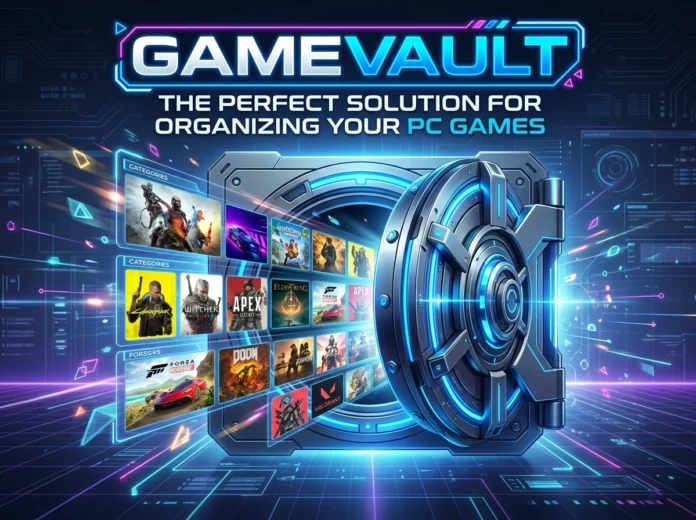
Gamevault: The perfect solution for organizing your PC games Quick answer: The GameVault self-hosted gaming platform is a dedicated application for organizing and distributing legally owned, DRM-free PC games. By deploying GameVault on a personal server, gamers can bypass third-party storefronts, track playtime statistics, enrich game metadata automatically, and maintain total ownership over their digital game libraries. Managing a massive PC game collection across multiple digital storefronts often frustrates PC gamers. Users purchase titles from various providers, resulting in fragmented libraries scattered across half a dozen proprietary clients. This fragmentation forces players to run unnecessary background software, consuming valuable system resources just to launch a single title. Digital ownership also presents a growing concern for modern software consumers. When you purchase a title on a major storefront, you typically purchase a license to access the software rather than the software itself. If a platform revokes your license, shuts down its servers, or removes a specific title due to licensing disputes, you lose access to your purchase entirely. This reality has driven a massive resurgence in the popularity of DRM-free (Digital Rights Management-free) software, where consumers can download standalone installation files and retain them indefinitely. However, accumulating hundreds of DRM-free installation files creates a new organizational challenge. Storing loose executable files and zipped archives on external hard drives makes finding, installing, and updating titles incredibly tedious. PC gamers need a centralized, organized way to view their offline collections. The GameVault self-hosted gaming platform solves this exact problem. By bringing the polished interface of a commercial storefront to your private home server, GameVault allows you to catalog, distribute, and play your legally owned DRM-free collection with exceptional ease. This article explores how GameVault works, details its core features, and explains why it serves as the ultimate game organization tool for dedicated PC gamers. What is the GameVault self-hosted gaming platform? The GameVault self-hosted gaming platform is a specialized ecosystem designed to host, manage, and distribute DRM-free game files from a private server. Unlike aggregator tools that simply combine existing store libraries into one visual interface, GameVault operates entirely independently of corporate storefronts. You supply the game files, host the server, and control the entire ecosystem. GameVault consists of two main components: the backend server and the frontend client. The backend server runs on your personal hardware (such as a NAS device, a Virtual Private Server, or a dedicated home server) and indexes your raw game files. It scans your designated storage directories, identifies the game archives, and builds a comprehensive database. The frontend client operates as a native Windows application or a responsive Web UI. This client connects to your private server, presenting your raw files as a visually stunning, highly organized game library. Users can browse their collections, click a single button to download the files to their local machine, and launch the title directly from the GameVault interface. Because the games run locally on your hardware, you never have to worry about the latency or video compression issues associated with cloud game streaming. Which core features does GameVault use to organize your game library? Organizing a massive catalog of software requires robust features. The GameVault self-hosted gaming platform provides an extensive suite of tools designed to automate library management and enhance the user experience. Automatic metadata enrichment through IGDB Manually adding cover art, descriptions, release dates, and developer information for hundreds of titles wastes countless hours. GameVault automates this entire process through a direct integration with IGDB (Internet Game Database). When you drop a new game folder into your server directory, GameVault scans the file name and automatically queries the IGDB API. The server fetches high-quality cover art, background images, genre tags, and detailed game summaries. By default, GameVault caches this metadata for 30 days to ensure your library always displays the most accurate and up-to-date information. Users simply add their files to a folder, and GameVault handles the visual presentation. Detailed playtime and progress tracking Tracking the time spent inside a virtual world remains a highly requested feature for PC gamers. GameVault monitors your active sessions and records your exact playtime for every title in your library. The application logs when you start an application and when you close it, compiling detailed statistics over time. This feature allows users to easily manage their backlog of unplayed titles. You can sort your library by playtime to identify neglected purchases or view your most played titles of the year. The platform also supports save file management. Users can configure GameVault to upload up to 10 localized save files per game directly to the server, ensuring your progress remains backed up and accessible. Multi-user social features and account management GameVault transforms a solitary hard drive into a private gaming community. Server administrators can create individual user accounts for friends and family members. Each user receives their own personalized view of the library, independent playtime tracking, and customized client settings. Administrators maintain complete control over user permissions. You can restrict access based on parental controls, establishing an age of majority (such as 18) and filtering out mature titles for younger users. The platform also features online activity statuses, allowing you to see exactly what your friends are currently playing in real-time. What are the main benefits of using GameVault for gamers? Choosing to self-host your library requires a small initial time investment, but the long-term benefits for digital software consumers are substantial. Total digital ownership and preservation The primary benefit of using GameVault is absolute digital preservation. Because GameVault focuses exclusively on DRM-free software, you never have to authenticate your purchases through a third-party server. If your internet connection drops, your GameVault client still launches your installed titles flawlessly. You preserve the history of your digital media exactly as you purchased it, entirely insulated from corporate licensing changes or server shutdowns. Escaping aggressive platform DRM Modern storefronts often package titles with aggressive DRM software that requires an always-online connection. This DRM can degrade application performance, increase loading times, and introduce software conflicts. By curating a DRM-free library inside GameVault, you ensure your PC runs only the code necessary to play the title itself. Enhanced privacy and data security Commercial launchers harvest extensive amounts of user data, tracking your browsing habits, hardware configurations, and purchasing history to serve targeted advertisements. The GameVault self-hosted gaming platform respects user privacy by design. All telemetry, playtime data, and library statistics remain localized on your personal database. The software does not track your data for marketing purposes, ensuring your recreational habits remain entirely private. How does GameVault streamline your daily gaming experience? GameVault makes interacting with offline files incredibly efficient. Setting up the platform requires a basic understanding of server deployment, but the daily usage experience mirrors the convenience of enterprise software. Seamless Docker Compose deployment Administrators can deploy the GameVault backend in minutes using Docker and Docker Compose. Docker isolates the application inside a container, preventing software conflicts with other services running on your hardware. To streamline the installation, GameVault utilizes a simple docker-compose.yml file. Administrators map their local game folders to the container's internal /files directory, set up a PostgreSQL database connection, and start the service with a single command. The software also supports advanced configuration hierarchies, allowing users to define settings via Docker Secrets, environment variables, or organized YAML files. Automated file extraction and installation When a user clicks "Download" on the GameVault client, the software initiates a direct file transfer from the private server to the local machine. The platform supports massive bandwidth limits, allowing users on local networks to download massive applications in minutes. GameVault automatically handles complex archive formats like .zip, .7z, and .rar. It extracts the contents to the user's local directory and intelligently identifies the primary executable file required to launch the application. For standard Windows setup files, GameVault can even utilize default command-line parameters (such as /SILENT) to attempt a completely automated background installation. How to choose between GameVault and other game launchers? When evaluating game organization tools, consumers often compare GameVault to other popular clients like Playnite or GOG Galaxy. The correct choice depends entirely on how you purchase and store your software. Choose the GameVault self-hosted gaming platform if your primary goal is hosting and distributing your own raw, DRM-free installation files from a centralized server to multiple client machines. GameVault excels when you want to act as your own private storefront, completely independent of external account integrations. Choose Playnite or GOG Galaxy if you rely heavily on DRM-protected purchases from major storefronts (like Steam or Epic Games) and simply want a unified visual interface to launch them. These aggregator tools scan your local machine for installed storefront clients and launch the corresponding DRM software required to play the title. They do not host your installation files or distribute them across a network. Ready to take back control of your game collection? The shift toward self-hosted software solutions represents a necessary evolution in digital media preservation. As digital storefronts become more restrictive, gamers need reliable tools to manage the media they legally own. The GameVault self-hosted gaming platform offers a polished, robust, and highly customizable environment that respects both the user and the software. By combining automated metadata enrichment, detailed playtime tracking, and effortless file distribution, it provides a premium library experience without the drawbacks of corporate oversight. Start organizing your DRM-free collection today by exploring the GameVault documentation and deploying your first container. Frequently asked questions about GameVault Can GameVault manage my Steam or Epic Games library? No. GameVault is built specifically for organizing and distributing DRM-free content, such as titles purchased from GOG or Humble Bundle. It cannot bypass the proprietary DRM used by major storefronts. Is the GameVault self-hosted gaming platform free to use? Yes, the core ecosystem of the GameVault self-hosted gaming platform is entirely free to download and deploy. The developers offer an optional GameVault+ premium subscription for users seeking advanced features, but the foundational library management tools remain permanently free. Do I need a PostgreSQL database to run GameVault? While the developers strongly recommend using a PostgreSQL database for optimal performance and stability, GameVault does support SQLite for users who prefer a simpler, single-file database structure during testing or lightweight deployments. Can I run the GameVault client on Linux or macOS? Currently, GameVault provides a native desktop client specifically for Windows operating systems. However, users on Linux and macOS can fully access their organized libraries, download files, and manage their profiles using the platform's responsive Web UI. Does GameVault support cloud game streaming? No. GameVault operates strictly as a library management and file distribution platform. Users download the game files from the server to their local machine, and the application utilizes the local hardware's processing power to run the software. Meta data Meta title GameVault: The Perfect Solution for Organizing Your Games Meta description Discover how the GameVault self-hosted gaming platform helps you organize, manage, and distribute your DRM-free PC game collection with automated metadata.

Gamevault: The perfect solution for organizing your PC games

The GameVault self-hosted gaming platform is a dedicated application for organizing and distributing legally owned, DRM-free PC games. By deploying GameVault on a personal...

Why 1xbet Mobile is Bangladesh’s Betting Future

The landscape of sports betting and online gaming across South Asia is shifting rapidly. Gone are the days when placing a wager required a...
The Ultimate Guide to Buying Sports Guest Posts

The Ultimate Guide to Buying Sports Guest Posts

Building a successful sports website requires more than just publishing great articles or selling top-tier merchandise. You need search engines to recognize your site...
Top Mistakes to Avoid When Buying Finance Guest Posts

Top Mistakes to Avoid When Buying Finance Guest Posts

Securing high-quality backlinks in the financial sector requires a careful, strategic approach. Search engines apply strict scrutiny to websites dealing with money, investing, and...
The Risks and Rewards of Buying PBN Backlinks

The Risks and Rewards of Buying PBN Backlinks

Building a powerful link profile is one of the most challenging aspects of search engine optimization. You can write exceptional content and optimize your...