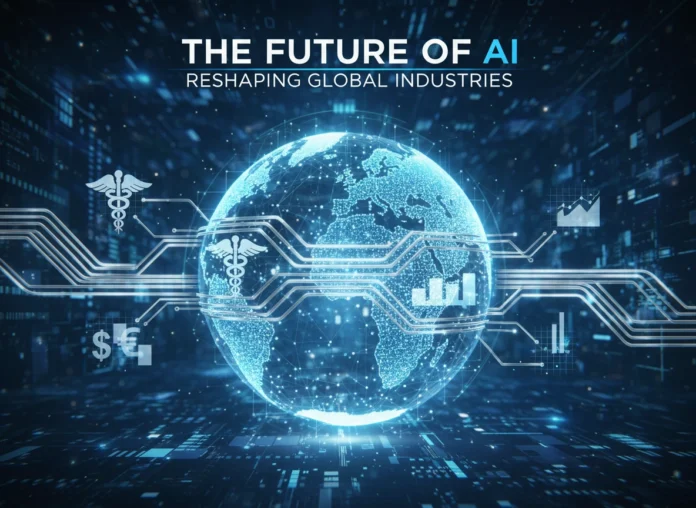
Artificial intelligence is rapidly moving from a theoretical concept to a practical tool that is fundamentally altering the landscape of global industries. Its ability to analyze vast amounts of data, identify patterns, and automate complex processes is creating unprecedented opportunities for growth, efficiency, and innovation. As AI technologies mature, they are not just optimizing existing systems but creating entirely new business models and capabilities. Understanding this technological shift is crucial for professionals and organizations aiming to remain competitive.
This article will explore the profound impact of artificial intelligence across key sectors, including healthcare, finance, retail, manufacturing, and education. We will examine current AI-driven trends, project future developments, and consider the significant challenges and ethical questions that accompany widespread AI adoption.
Healthcare: A New Era of Precision Medicine
The healthcare industry is experiencing a revolution driven by AI. Machine learning algorithms are now capable of analyzing medical data with a speed and accuracy that surpasses human capabilities, leading to significant advancements in diagnostics, treatment, and patient care.
Enhancing Diagnostics and Treatment
One of the most significant impacts of AI in healthcare is its application in medical imaging. AI models can analyze X-rays, CT scans, and MRIs to detect abnormalities like tumors or signs of neurological disease often earlier and more accurately than the human eye. For instance, algorithms are being used to identify diabetic retinopathy, a leading cause of blindness, by examining retinal photographs. This allows for earlier intervention and better patient outcomes.
Beyond diagnostics, AI is personalizing treatment plans. By analyzing a patient’s genetic information, lifestyle, and medical history, AI systems can help doctors predict which treatments will be most effective for an individual. This field, known as precision medicine, is moving healthcare away from a one-size-fits-all approach and toward highly customized care strategies that improve efficacy and reduce side effects.
Streamlining Administrative Tasks
Healthcare is also burdened by extensive administrative work. AI is automating routine tasks such as billing, coding, and managing patient records, freeing up valuable time for medical professionals to focus on patient care. Natural language processing (NLP) tools can transcribe doctor-patient conversations, automatically updating electronic health records and reducing the manual data entry required of clinicians.
Finance: Automating and Securing Transactions
In the financial sector, AI is a powerful tool for enhancing security, improving customer service, and optimizing investment strategies. The industry’s reliance on data makes it a perfect environment for AI and machine learning applications.
Fraud Detection and Risk Management
Financial institutions lose billions of dollars to fraud each year. AI algorithms are highly effective at identifying fraudulent activity in real-time by analyzing transaction patterns. These systems can learn what normal behavior looks like for a specific customer and flag any deviations instantly, such as a purchase made in an unusual location or for an uncharacteristically large amount. This proactive approach helps prevent fraud before it causes significant financial damage.
Similarly, AI is transforming risk management. Lenders can use machine learning models to assess creditworthiness more accurately by analyzing a wider range of data points than traditional credit scores. This allows for more informed lending decisions and can even open up access to credit for individuals who might be overlooked by older systems.
Algorithmic Trading and Robo-Advisors
The world of investment is also being reshaped by AI. Algorithmic trading uses complex AI systems to execute trades at speeds impossible for humans, capitalizing on market fluctuations in milliseconds. For individual investors, robo-advisors offer automated, algorithm-driven financial planning services. These platforms assess a user’s financial situation and future goals to offer and manage a personalized investment portfolio, making sophisticated wealth management accessible to a broader audience.
Retail: Personalizing the Customer Journey
The retail industry is leveraging AI to create highly personalized and efficient shopping experiences. From product recommendations to supply chain management, AI is optimizing every step of the customer journey.
Hyper-Personalization and Customer Experience
AI-powered recommendation engines are a cornerstone of modern e-commerce. By analyzing a user’s browsing history, past purchases, and even mouse movements, platforms like Amazon and Netflix can suggest products and content with remarkable accuracy. This level of personalization not only enhances the customer experience but also drives sales and increases customer loyalty.
In physical stores, AI is powering cashier-less checkout systems and smart shelves that automatically track inventory. Chatbots and virtual assistants are also becoming common, providing 24/7 customer support and answering queries without human intervention.
Optimizing the Supply Chain
Behind the scenes, AI is revolutionizing retail logistics. Predictive analytics can forecast demand for products with greater accuracy, helping retailers optimize inventory levels and reduce waste. AI also optimizes delivery routes for shipping, saving time and fuel costs while ensuring faster delivery times for customers. This end-to-end optimization creates a more efficient and responsive retail ecosystem.
Manufacturing: The Rise of Smart Factories
Manufacturing has entered the era of Industry 4.0, where AI and automation are creating “smart factories.” These facilities are more efficient, productive, and safer than their predecessors.
Predictive Maintenance and Quality Control
One of the most costly aspects of manufacturing is unexpected equipment failure. AI-powered predictive maintenance systems use sensors to monitor machinery in real-time. The algorithms can predict when a part is likely to fail, allowing maintenance to be scheduled proactively. This minimizes downtime and extends the lifespan of expensive equipment.
AI is also improving quality control. Computer vision systems can inspect products on the assembly line with greater speed and precision than human inspectors, identifying defects that might be invisible to the naked eye. This ensures a higher standard of quality and reduces the number of defective products that reach the market.
Education: Tailoring Learning to Individual Needs
The field of education is beginning to embrace AI to create more personalized and effective learning experiences. AI tools can adapt to a student’s individual learning pace and style, offering customized support and resources.
Adaptive Learning Platforms
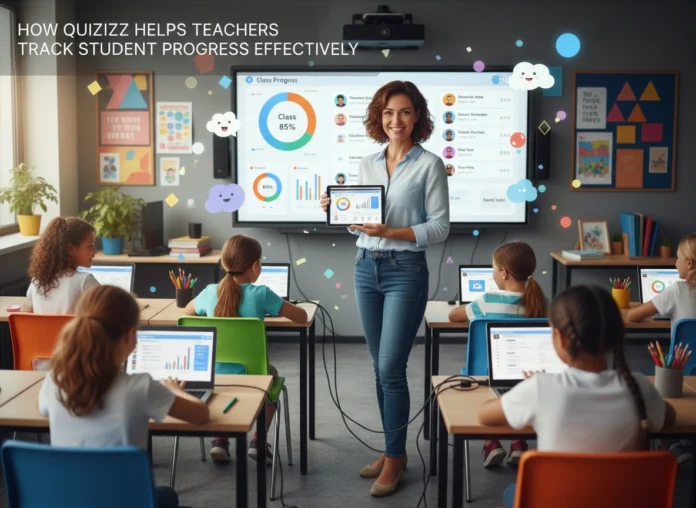
Adaptive learning platforms use AI to adjust educational content in real-time based on a student’s performance. If a student is struggling with a particular concept, the system can provide additional resources, practice problems, or alternative explanations. Conversely, if a student is excelling, the platform can introduce more advanced topics to keep them engaged. This tailored approach helps ensure that every student can learn at their own optimal pace.
Automating Administrative Duties for Educators
Similar to healthcare, AI can alleviate the administrative burden on teachers. AI can assist in grading assignments, managing schedules, and providing feedback on common student errors. This allows educators to dedicate more time to instruction, mentorship, and one-on-one interaction with students.
Challenges and Ethical Considerations
The widespread adoption of AI is not without its challenges. One of the primary concerns is job displacement. As AI automates more tasks previously performed by humans, there is a need for workforce retraining and a societal shift toward roles that require creativity, critical thinking, and emotional intelligence.
Data privacy is another critical issue. AI systems rely on vast amounts of data, and ensuring this information is collected and used responsibly is paramount. Bias in AI algorithms is also a significant concern. If an AI model is trained on biased data, it can perpetuate and even amplify existing societal biases, leading to unfair outcomes in areas like hiring and lending.
Conclusion: Navigating the AI-Powered Future
Artificial intelligence is no longer a far-off concept; it is a present-day reality that is actively reshaping industries across the board. From making healthcare more precise to rendering financial services more secure, its potential for positive transformation is immense. However, realizing this potential requires a thoughtful and responsible approach.
As we move forward, it is essential for businesses, governments, and individuals to address the ethical and societal challenges that AI presents. By investing in education, establishing clear regulatory frameworks, and fostering public dialogue, we can navigate the complexities of this new technological era. The future will be defined not just by the capabilities of AI, but by our wisdom in guiding its development and integration into our world.
Please click here for more info