Buy Amazon Aws Accounts Web Services (AWS) stands as a titan in the cloud computing industry. It offers a vast and ever-expanding suite of services, from simple data storage and computing power to complex machine learning and artificial intelligence tools. For businesses of all sizes, AWS provides the infrastructure to build, deploy, and scale applications with remarkable flexibility. The standard path to accessing these services is straightforward: create a new account directly with Amazon. However, a secondary market has emerged where individuals and businesses can buy pre-existing AWS accounts.
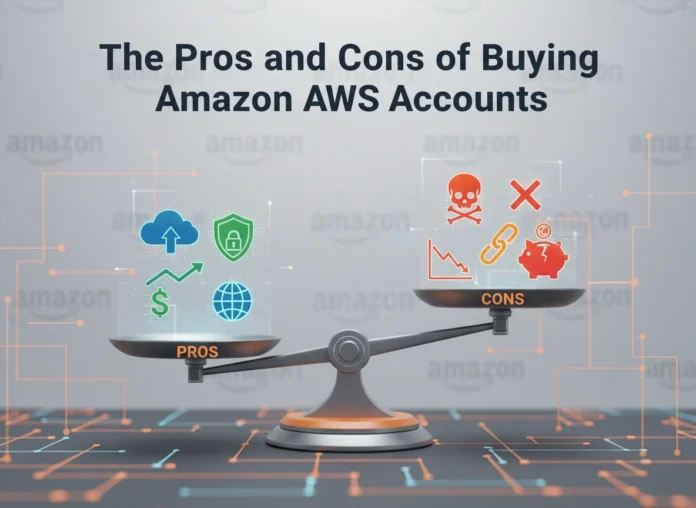
This practice raises important questions about its benefits and drawbacks. While the idea of acquiring a ready-made account might seem appealing, it’s a path filled with significant risks and complexities. This article will explore the reasons why someone might consider buying an AWS account, weigh the potential pros against the substantial cons, and discuss safer alternatives. We will cover the potential for time savings and access to specific configurations, but also delve into the serious security vulnerabilities, compliance nightmares, and direct violations of Amazon’s terms of service.
Why Consider Buying an AWS Account?
The allure of purchasing an AWS account often stems from a desire to bypass the standard setup process or gain perceived advantages. While creating a new account is free, certain scenarios lead people to explore this gray market.
Perceived Cost Savings and Spending Limits
One of the most common motivations is the belief that a purchased account might come with a higher initial spending limit or access to credits. New accounts sometimes have lower default service quotas, which can be a hurdle for projects that require significant resources from day one. A seller might advertise an “aged” account with a proven history of high usage, suggesting it has higher, pre-approved limits. This can be attractive to developers who want to avoid the process of requesting limit increases from AWS support.
Pre-Configured Environments
Another reason is the appeal of a turnkey solution. Some sellers offer accounts that are pre-configured for specific tasks, such as running large-scale data processing jobs, hosting complex web applications, or even for activities that might be flagged on a new account. For a team without the requisite expertise, buying an account that already has the necessary Virtual Private Clouds (VPCs), security groups, and IAM (Identity and Access Management) roles configured can seem like a shortcut to getting a project off the ground.
Access to Region-Specific or Beta Features
In some cases, access to certain AWS services or features is rolled out regionally or is available only in a limited beta. An account that already has access to these exclusive features can be a valuable commodity. A developer in a region without access might be tempted to purchase an account based in a different region to experiment with new technology before it’s widely available.
The Potential Benefits of a Purchased Account
While fraught with risk, the perceived advantages of buying an AWS account are what drive the market. It’s important to understand these supposed benefits to see why this option can seem tempting.
Time Efficiency
Setting up a new AWS account, especially for a complex enterprise environment, is not instantaneous. It involves configuring billing alerts, setting up security protocols with IAM users and roles, establishing organizational units, and requesting service quota increases. Purchasing an account that has some of this foundational work completed can theoretically save hours or even days of administrative effort, allowing a team to focus directly on development and deployment.
Scalability and Established History
An established AWS account with a history of consistent, legitimate usage may have an easier time scaling resources. AWS systems may be less likely to flag sudden spikes in resource consumption as suspicious on an account with a proven track record. This can be particularly appealing for businesses planning rapid growth or expecting unpredictable traffic, as it may reduce the friction involved in scaling up services on demand.
Access to Specialized Tools
Some purchased accounts may come with access to the AWS Marketplace, with subscriptions to third-party software already in place. This could include security tools, databases, or developer software. The buyer might see this as a way to acquire a bundle of services without having to individually procure and configure each one.
The Significant Risks and Downsides
The potential benefits of buying an AWS account are heavily outweighed by a long list of severe risks. Engaging in this practice can lead to financial loss, data breaches, and legal trouble, making it a dangerous gamble for any serious business or developer.
Security and a Compromised Foundation
This is the most critical risk. When you buy an AWS account, you have no way of knowing its true history or who else might have access. The seller could retain hidden administrative access through undisclosed IAM users or access keys. These “backdoors” would allow them to access your data, modify your infrastructure, or run their own resource-intensive tasks on your dime. You are essentially building your digital house on a foundation you did not lay and cannot trust. A malicious seller could wait until you have deployed sensitive customer data or valuable intellectual property before exploiting their access.
Violation of AWS Terms of Service
The AWS Customer Agreement, the contract every user agrees to, explicitly prohibits the sale or transfer of accounts. Section 11.4 states, “You will not misrepresent or embellish the relationship between us and you… You will not assign or otherwise transfer this Agreement or any of your rights and obligations under this Agreement, without our prior written consent.” Buying an account is a direct violation of this agreement. If AWS discovers the transfer, they have the right to suspend or terminate the account immediately and without warning. This could result of the instant and permanent loss of all data and infrastructure hosted within it.
Compliance and Regulatory Nightmares
For any business that handles sensitive information—such as personal data, financial records, or health information—using a purchased AWS account is a compliance disaster. Regulations like GDPR, HIPAA, and PCI DSS require strict controls over data access and a clear chain of custody. It is impossible to prove compliance when you cannot account for the entire history of the environment. You cannot guarantee that the account hasn’t been previously compromised or that it meets the necessary security standards. A data breach under these circumstances could lead to massive fines, lawsuits, and irreparable damage to your company’s reputation.
Hidden Costs and Billing Issues
The billing history of a purchased account can be a minefield. The account could have outstanding balances or be linked to a stolen credit card. When AWS identifies the fraudulent payment method, they will hold the current user responsible for the costs. Furthermore, a seller could rack up huge bills through a hidden backdoor and then disappear, leaving you to deal with the financial fallout. Untangling these billing disputes with AWS support can be a nightmare, especially when you have to admit you acquired the account in a way that violates their terms.
Safer and Ethical Alternatives
Given the overwhelming risks, buying an AWS account is never a recommended practice. Fortunately, there are legitimate and secure ways to achieve the same goals.
Use AWS Organizations and IAM
If the goal is to provide pre-configured environments for different teams or projects, AWS Organizations is the proper tool for the job. You can create a master account and then provision new, separate member accounts under it. Using Service Control Policies (SCPs), you can enforce security and spending guardrails centrally. With IAM roles and cross-account access, you can securely grant permissions without sharing credentials. This provides separation and control without violating any terms.
Leverage Infrastructure as Code (IaC)
To achieve time efficiency and create repeatable, pre-configured setups, use Infrastructure as Code (IaC) tools like AWS CloudFormation or Terraform. With IaC, you define your entire cloud environment—VPCs, subnets, security groups, servers, and more—in code templates. This allows you to deploy a complete, standardized architecture in a new AWS account in minutes. The templates can be version-controlled, shared, and audited, providing a far more secure and efficient method than buying a pre-configured account.
Plan Ahead for Service Quota Increases
If you anticipate needing high resource limits, the correct approach is to plan ahead. As you set up your new AWS account, work with AWS support to proactively request increases for the service quotas you expect to need. By providing a clear business case and forecasting your usage, you can get the limits you require. This process is part of building a healthy relationship with AWS and demonstrates that you are a legitimate user.
A Balanced Perspective
The market for buying AWS accounts exists because it promises shortcuts. The ideas of saving time, bypassing limits, and acquiring a ready-made environment are tempting. However, these perceived benefits are an illusion that masks a reality of extreme risk. The potential for security breaches, the certainty of violating AWS terms of service, and the high likelihood of compliance and billing problems make this practice untenable for any reputable operation.
There are no shortcuts to building a secure, scalable, and compliant cloud infrastructure. The proper path involves using the powerful tools AWS provides, such as AWS Organizations for governance and IaC for automation. By investing the time to set up an account correctly and engaging with AWS support to plan for your needs, you build on a solid foundation that you control completely. The small amount of time you might save by purchasing an account is not worth the catastrophic risk of losing your data, your money, and your business’s reputation.